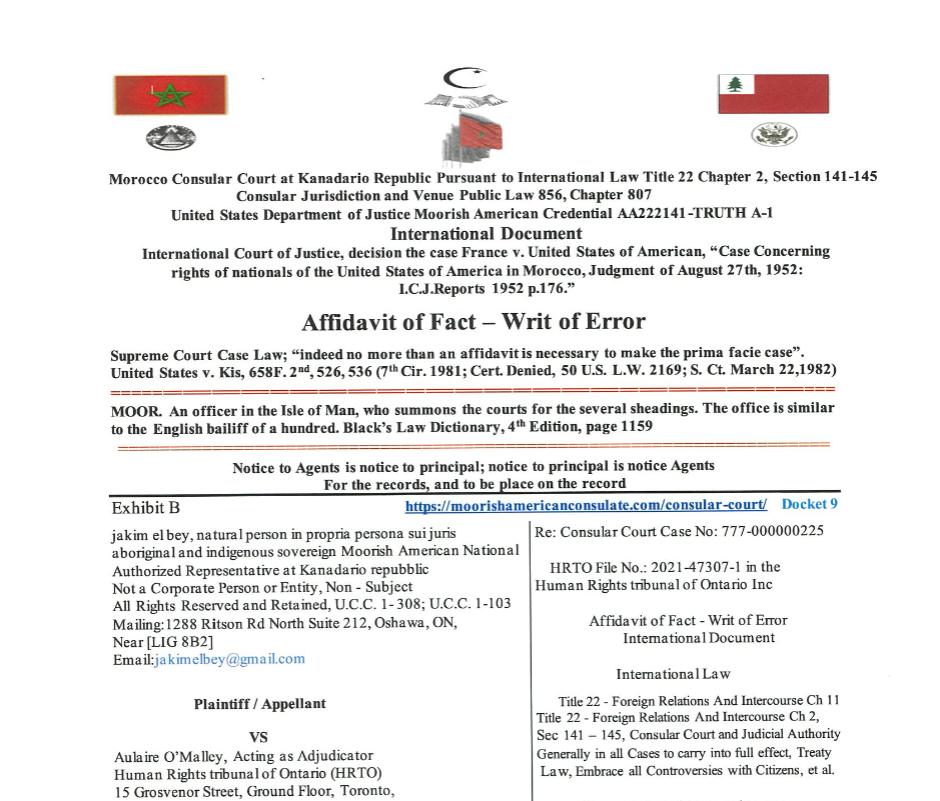
International Law
TITLE 22 – FOREIGN RELATION AND INTERCOURSE
Section 141-145, Chapter 2 – CONSULAR COURT and Judicial Authority Generally in all Cases to
carry into full effect, Treaty Law, Embracing all Controversies with Citizens of United States, Canada,
Great Britain and others.
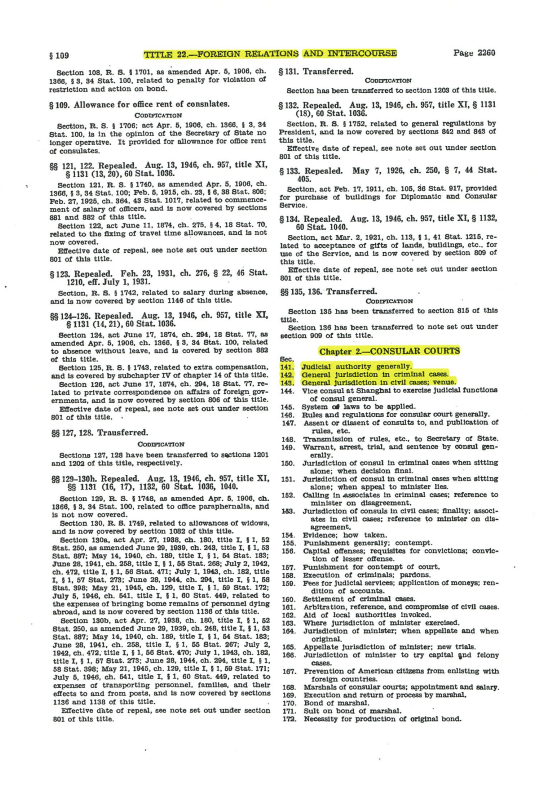
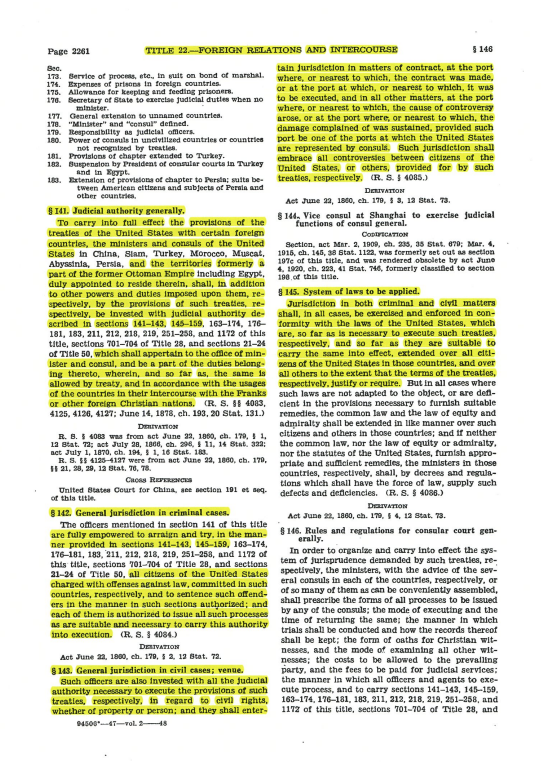
Title 22 Chapter 2 Section 141. Judicial Authority Generally.
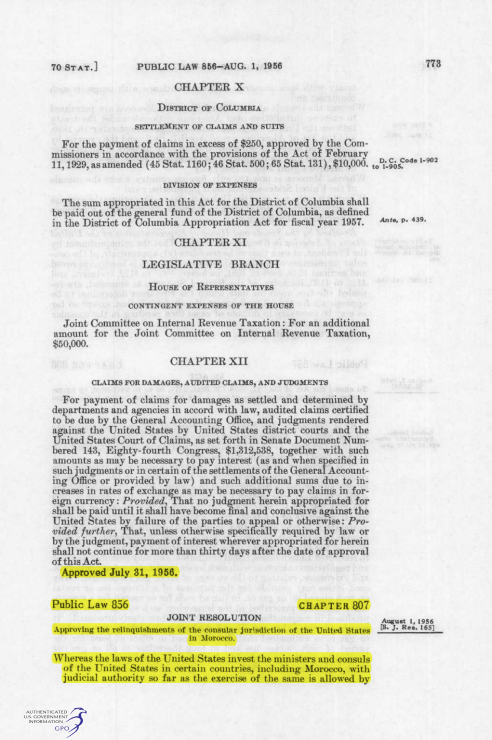
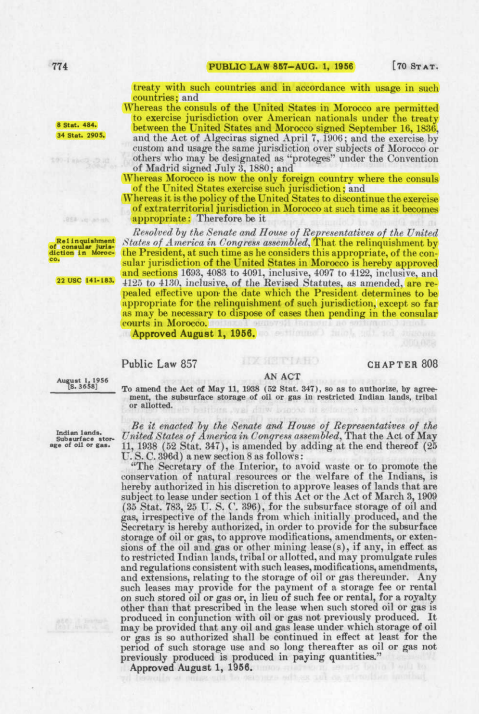
To carry into full effect the provisions of the treaties of the United States with certain foreign countries, the ministers and consuls of the United States in China, Siam, Turkey, Morocco, Muscat, Abyssinia, Persia, and the territories formerly a part of the former Ottoman Empire including Egypt,
duly appointed to reside therein, shall, in addition to other powers and duties imposed upon them, respectively, by the provisions of such treaties, respectively, be invested with judicial authority described in sections
141-143, 145-159, 163-174, 176-181, 183, 211, 212, 218, 219, 251-258, and 1172 of this title, sections 701-704 of Title 28, and sections 21-24 of Title 50, which shall appertain to the office of minister and consul, and be a part of the duties belonging thereto, wherein, and so far as, the same is allowed by treaty, and in accordance with the usages of the countries in their intercourse with the Franks or other foreign Christian nations.
Title 22 Chapter 2 Section 142. General jurisdiction in criminal cases. The officers mentioned in section 141 of this title are fully empowered to arraigh and try, in the manner provided in sections
141-143, 145-159, 163-174, 176-181, 183, 211, 212, 218, 219, 251-258, and 1172 of this title, sections 701-704 of Title 28, and sections 21-24 of Title 50,
all citizens of the United States charged with offenses against law, committed in such countries, respectively, and to sentence such offenders in the manner in such sections authorized; and each of them is authorized to issue all such processes as are suitable and necessary to carry this authority into execution.
(R. S. S 4084)
Title 22 Chapter 2 Section 143. General jurisdiction in civil cases,
venue.
Such officers are also invested with all the judicial authority necessary to execute the provisions of such treaties, respectively, in regard to civil rights, whether of property or person; and they shall entertain jurisdiction In matters of contract,
at the port where, or nearest to which, the contract was made, or at the port at which, or nearest to which, it was to be executed, and in all other matters, at the port where, or nearest to which, the cause of controversy arose, or at the port where, or nearest to which, the damage complained of was sustained, provided such port be one of the ports at which the United States are represented by consuls.
Such jurisdiction shall embrace all controversies between citizens of the United States, or others, provided for by such treaties, respectively.
(R. S. S 4086)