
An official website of the Moorish Nations and Governments

Moorish American Consulate

Language

CONSULAR JURISDICTION

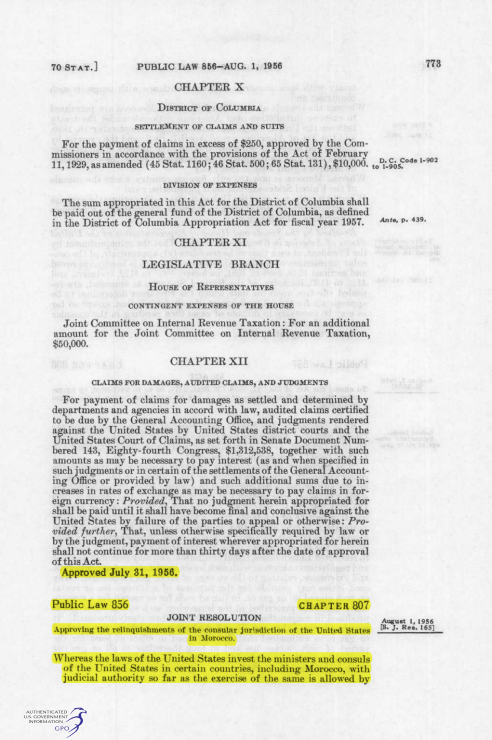
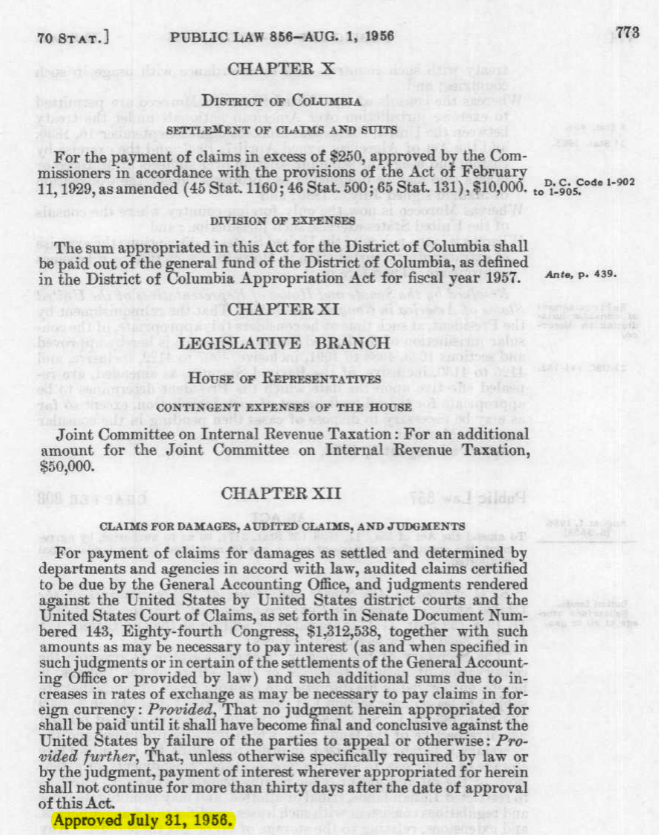
Whereas the laws of the United States invest the ministers and consuls of the United States in certain countries, including Morocco, with judicial authority so far as the exercise of the same is allowed by treaty with such countries and in accordance with usage in such countries; and

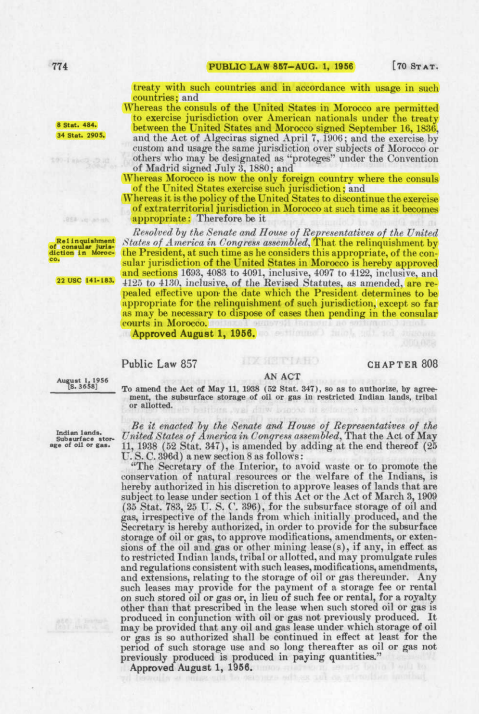
Whereas the consuls of the United States in Morocco are permitted to exercise jurisdiction over American nationals under the treaty between the United States and Morocco signed September 16, 1836, and the Act of Algeciras signed April 7, 1906; and the exercise by custom and usage the same jurisdiction over subjects of Morocco or others who may be designated as “proteges” under the Convention of Madrid signed July 3, 1880; and

Whereas Morocco is now the only foreign country where the consuls of the United States exercise such jurisdiction; and

Whereas it is the policy of the United States to discontinue the exercise of extraterritorial jurisdiction in Morocco at such time as it becomes appropriate: Therefore be it Resolved by the Senate and House of Representatives of the United States of America in Congress assembled^ That the relinquishment by the President, at such time as he considers this appropriate, of the consular jurisdiction of the United States in Morocco is hereby approved and sections 1693, 4083 to 4091, inclusive, 4097 to 4122, inclusive, and 4125 to 4130, inclusive, of the Revised Statutes, as amended, are repealed effective upon the date which the President determines to be appropriate for the relinquishment of such jurisdiction, except so far as may be necessary to dispose of cases then pending in the consular courts in Morocco.

Approved August 1, 1956.

Public Law 856, Chapter 807
....

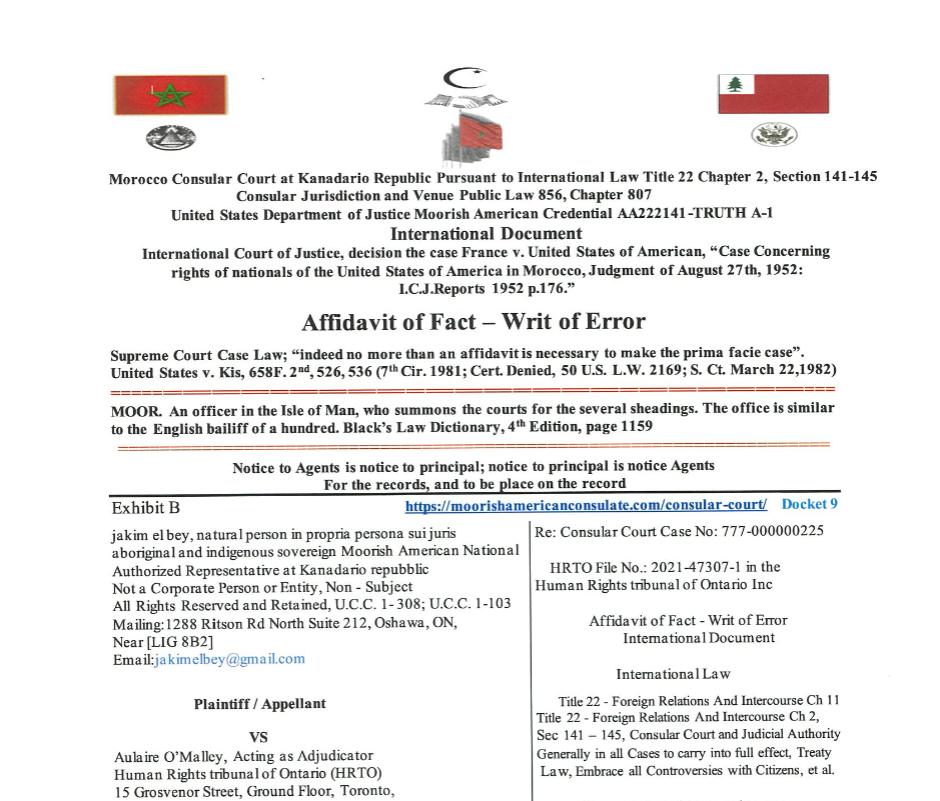
Morocco Consular Court is an Article III court authorized under International Law and the Treaty of Peace and Friendship of 1787 and 1836 between the United States and the Moors Moroccan Empire to settle disputes between the Moors and Colonial CITIZENS of the America’s. See Article 20 and 21 of the said Treaty.

Article 20: “If any of the Citizens of the United States, or any Persons under their Protection, shall have any disputes with each other, the Consul shall decide between the Parties, and whenever the Consul shall require any Aid or Assistance from our Government, to enforce his decisions, it shall be immediately granted to him.”

Article 21: If any Citizen of the United States should kill or wound a Moor, or, on the contrary, if a Moor shall kill or wound a Citizen of the United States, the Law of the Country shall take place, and equal Justice shall be rendered, the Consul assisting at the Trial; and if any Delinquent shall make his escape, the Consul shall not be answerable for him in any manner whatever.

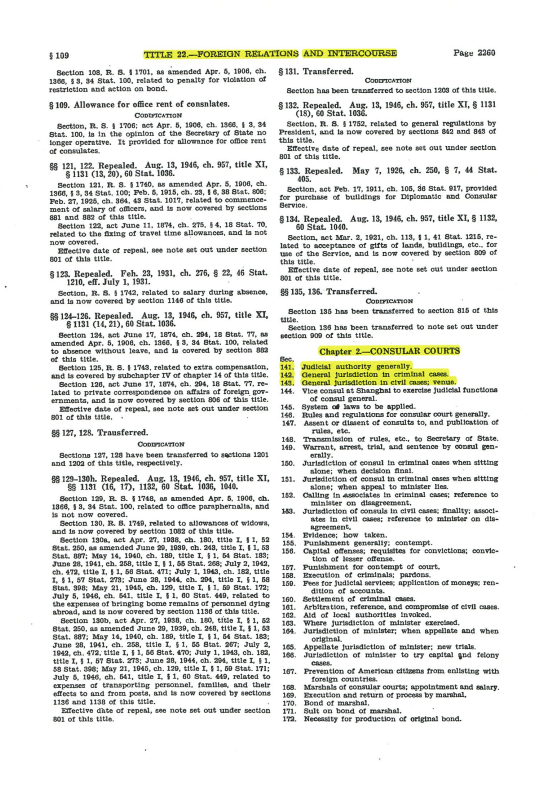
Title 22 - Foreign Relation and Intercourse
Chapter 3, Section 141-145

Morocco Consular Court is an Article III court authorized under International Law and the Treaty of
Peace and Friendship of 1787 and 1836 between the United States and the Moors Moroccan Empire
to settle disputes between the Moors and Colonial CITIZENS of the America’s. See Article 20 and 21
of the said Treaty.
Article 20: “If any of the Citizens of the United States, or any Persons under their Protection, shall
have any disputes with each other, the Consul shall decide between the Parties, and whenever the
Consul shall require any Aid or Assistance from our Government, to enforce his decisions, it shall be
immediately granted to him.”
Article 21: If any Citizen of the United States should kill or wound a Moor, or, on the contrary, if a
Moor shall kill or wound a Citizen of the United States, the Law of the Country shall take place, and
equal Justice shall be rendered, the Consul assisting at the Trial; and if any Delinquent shall make his
escape, the Consul shall not be answerable for him in any manner whatever.

CONSULAR JURISDICTION

TITLE 22 – FOREIGN RELATION AND INTERCOURSE Section 141-145, Chapter 2 – CONSULAR COURT JURIDICTION: Judicial Authority Generally in all Cases to carry into full effect, Treaty Law, Embracing all Controversies with Citizens of United States, Canada, Great Britain and others.
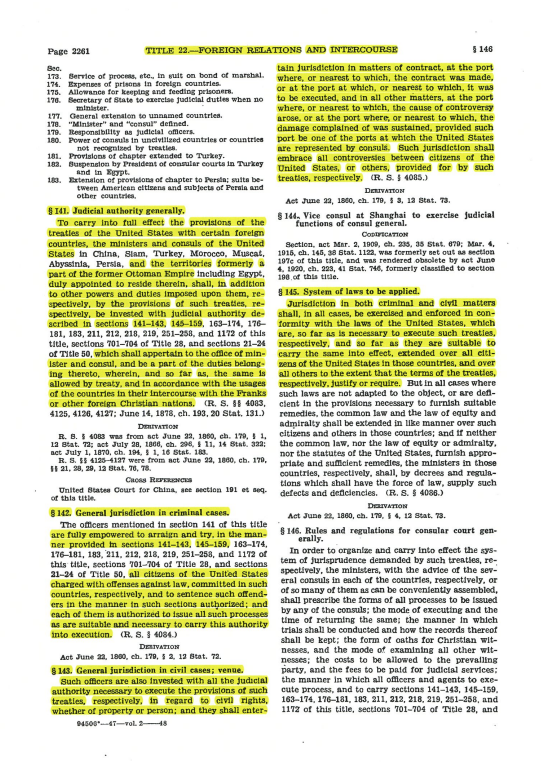
Title 22 Chapter 2 Section 141. Judicial Authority Generally. To carry into full effect the provisions of the treaties of the United States with certain foreign countries, the ministers and consuls of the United States in China, Siam, Turkey, Morocco, Muscat, Abyssinia, Persia, and the territories formerly a part of the former Ottoman Empire including Egypt, duly appointed to reside therein, shall, in addition to other powers and duties imposed upon them, respectively, by the provisions of such treaties, respectively, be invested with judicial authority described in sections 141-143, 145-159, 163-174, 176-181, 183, 211, 212, 218, 219, 251-258, and 1172 of this title, sections 701-704 of Title 28, and sections 21-24 of Title 50, which shall appertain to the office of minister and consul, and be a part of the duties belonging thereto, wherein, and so far as, the same is allowed by treaty, and in accordance with the usages of the countries in their intercourse with the Franks or other foreign Christian nations.
Title 22 Chapter 2 Section 142. General jurisdiction in criminal cases. The officers mentioned in section 141 of this title are fully empowered to arraigh and try, in the manner provided in sections 141-143, 145-159, 163-174, 176-181, 183, 211, 212, 218, 219, 251-258, and 1172 of this title, sections 701-704 of Title 28, and sections 21-24 of Title 50, all citizens of the United States charged with offenses against law, committed in such countries, respectively, and to sentence such offenders in the manner in such sections authorized; and each of them is authorized to issue all such processes as are suitable and necessary to carry this authority into execution. (R. S. S 4084)
Title 22 Chapter 2 Section 143. General jurisdiction in civil cases, venue. Such officers are also invested with all the judicial authority necessary to execute the provisions of such treaties, respectively, in regard to civil rights, whether of property or person; and they shall entertain jurisdiction In matters of contract, at the port where, or nearest to which, the contract was made, or at the port at which, or nearest to which, it was to be executed, and in all other matters, at the port where, or nearest to which, the cause of controversy arose, or at the port where, or nearest to which, the damage complained of was sustained, provided such port be one of the ports at which the United States are represented by consuls. Such jurisdiction shall embrace all controversies between citizens of the United States, or others, provided for by such treaties, respectively. (R. S. S 4086)

WORLD COURT, I.CJ. INTERNATIONAL COURT OF JUSTICE

“Case concerning rights of nationals of the United States of America in Morocco, Judgment of August 27th, 1952 1.C. J. Reports 1952, p. 176.”

214 JUDGMENT OF 27 VIII 52 (u.s. NATIONALS IN MOROCCO)

Judge Hsu Mo declares that, in his opinion, the jurisdictional rights of the United States of America in the French Zone of Morocco are limited to those provided in Articles 20 and 21 of its Treaty with Morocco of September 16th, 1836, and that the United States is not entitled to exercise consular jurisdiction in cases involving the application to United States citizens of those provisions of the Act of Algeciras of 1906 which, for their enforcement, carried certain sanctions. The Act of Algeciras, as far as the jurisdictional clauses are concerned, was concluded on the basis of a kind of consular jurisdiction as it existed at that time in its full form and in complete uniformity among the Powers in Morocco. The various provisions, in referring to “consular jurisdiction”, “competent consular authority”,”consular court of the defendant”, etc., clearly meant that jurisdiction which was being uniformly exercised by foreign States over their respective nationals as defendants in all cases. They did not mean such limited jurisdiction as might be exercised by the United States consular courts, in accordance with Article 20 of the Moroccan-United States Treaty of 1836, in cases involving United States citizens or protégés only.